
 RONGLI NEW MATERIAL
From Resin to Roll: The Cast Stretch Film Process
Follow the main stages of cast stretch film production, from resin blending and melt extrusion to cooling and controlled winding.
Transparent PE stretch film is formed through a combination of materials and processing stages. The cast film process presented on Rongli's website can be understood through the following steps.
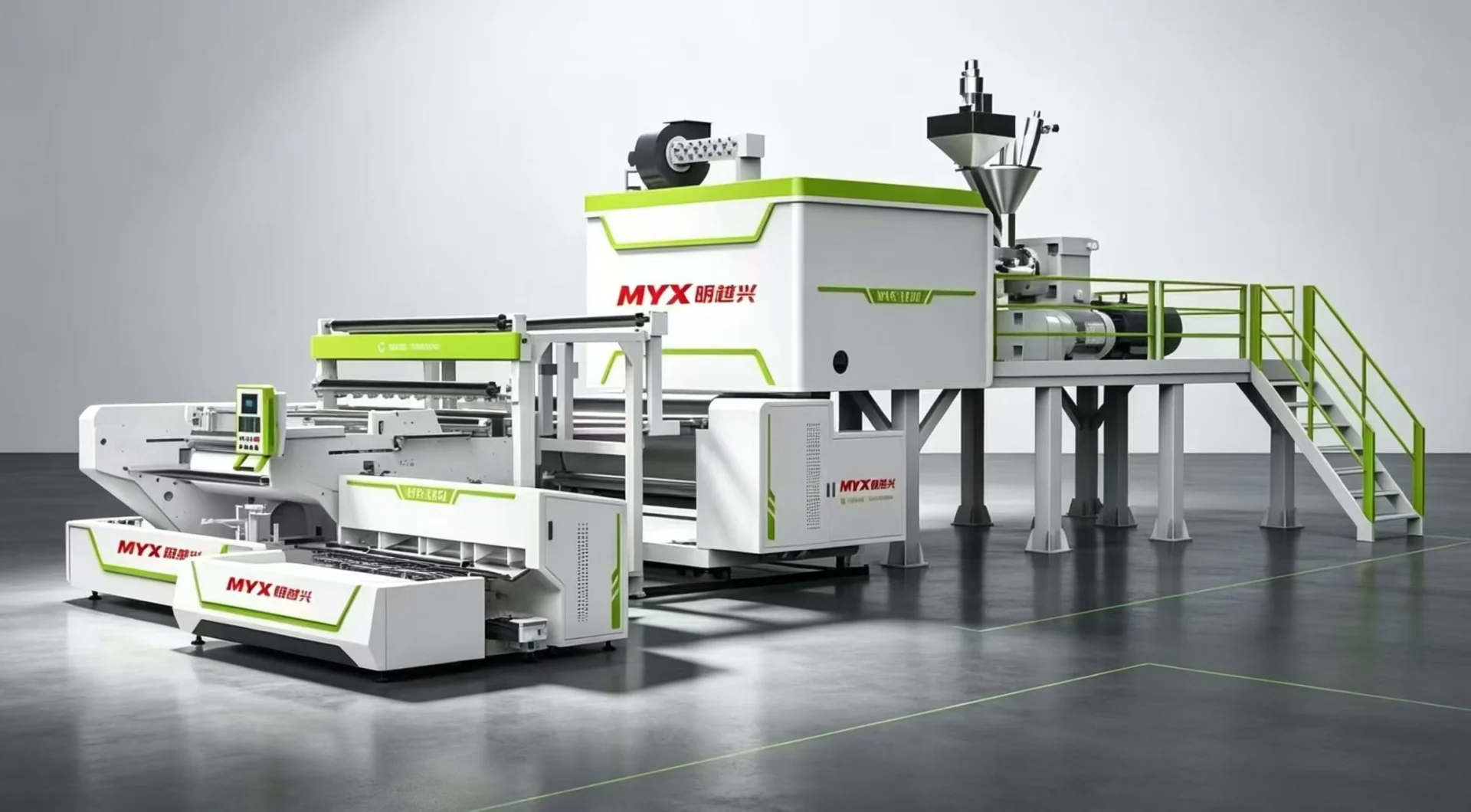
Resin Blending: Starting with Pellets
Polyethylene resins, including LLDPE, are blended according to the formulation before feeding. Resin grades, blend ratios and additives are selected with both the intended film properties and the processing equipment in mind.
Melt Extrusion: Forming a Continuous Melt Sheet
The pellets are heated and plasticised in the extruder. The screw conveys the melt to a flat die, which forms a continuous sheet of molten polymer. Temperature, output and downstream line speed work together to support continuous film formation.
Cast Cooling: Setting the Film
The melt contacts a chilled roll and solidifies before passing through subsequent handling and thickness measurement stages. Film formation and thickness control are adjusted in relation to the formulation, roll temperature and line speed.
Controlled Winding: Preparing the Finished Roll
The film is wound under controlled tension and slit into the required delivery sizes. Roll appearance, even edges and unwinding behaviour provide practical starting points for assessing how the finished film handles in use.